

How to Recognize When You're Forcing the Work
Sometimes the problem isn't the material, the tool, or the idea. Sometimes it's the pressure we place on the process.

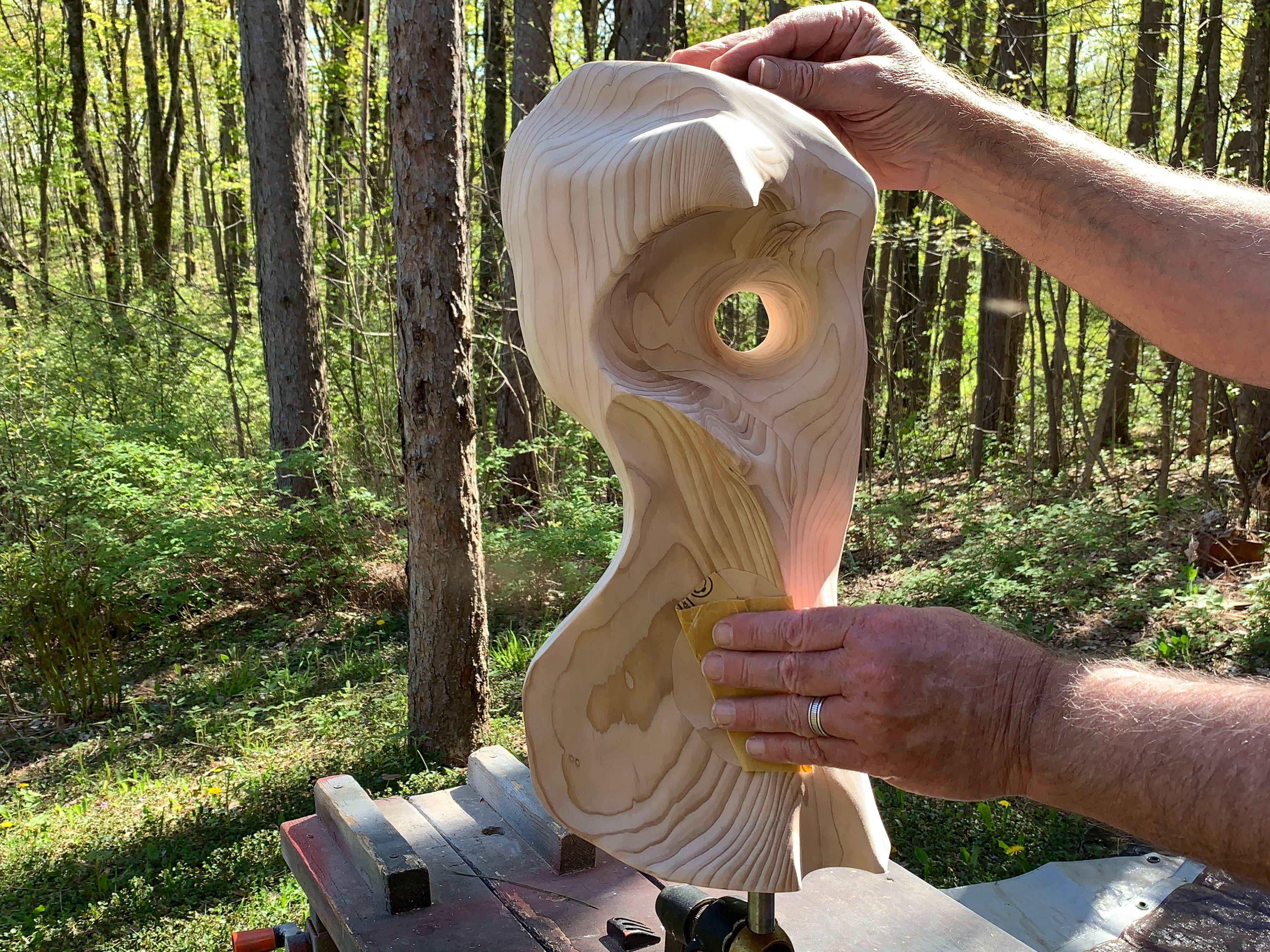
When The Work Feels Forced.
There are moments in the process
when the work begins to tighten.
Not in a way that is immediately visible,
but something in it loses ease.
The lines no longer flow in the same way.
The surface feels like it resists.
And the form, though still taking shape,
feels slightly out of alignment with itself.
A Slight Shift
It doesn’t happen all at once.
At first, everything appears to be moving forward.
The tool responds as expected, and the material yields.
The form continues to develop with contours and shapes.
But somewhere within that movement,
a faint shift occurs.
Something becomes less certain.
Not enough to stop, only enough to be felt.
Trying to Correct
In those moments, the instinct is to adjust.
To refine what feels off.
And to bring the work back into balance.
A small adjustment is made.
You feel it didn’t help, so then another.
Each one guided by the desire
to recover what has just been lost.
But the more the work is corrected,
the more it seems to drift.
Not dramatically, showing its face
but in a way that slowly accumulates.
When Effort Becomes Interference
Then there is a point at which the concentrated
effort begins to separate from clarity.
The hands continue to move,
but the direction is no longer grounded.
Decisions are made in response to what has already happened,
rather than from a deeper sense of what is needed.
And the work, instead of opening,
begins to close in on itself.
The Form That Slips Away
What is difficult to recognize
is that the moment of clarity
has already passed.
It was there briefly,
before the first uncertain movement.
But once the work begins to be pushed,
that clarity becomes harder to return to.
The form that once felt near
now feels just out of reach.
And the more it is pursued,
the further it seems to recede.
Continuing Out of Habit
Still, the process often continues.
Not out of confidence,
but out of momentum.
It can feel easier to keep going
than to stop and acknowledge
that something has shifted.
So the hands move and the surface changes.
And the work carries forward
on a path that was never fully seen.
The Quiet Recognition
At some point, you will find there is a pause.
Not intentional, but necessary.
The tool is set down on the bench
And the eye returns to the surface,
not to change it,
but simply to look.
And in that moment,
something becomes clear.
The issue was never in the material.
Nor in the tool.
It was in the way the work was approached.
What Was Missed
There was a moment, earlier,
when the direction of the form
could have been seen.
A moment that required no action,
only attention.
But it passed quickly,
as those moments often do.
And in moving past it,
the work was asked to become something
it was not yet ready to be.
Letting the Work Settle
When the movement stops,
the tension begins to ease.
Not immediately at first,
but gradually.
The work is no longer being directed.
It is being allowed to find its voice or path.
And in that allowance,
something returns.
Not the same clarity as before,
but a quieter version of it.
One that does not need to be forced.
A Different Way Forward
From here, the process changes.
Not in appearance,
but in intention.
The next movement, when it comes,
is smaller.
More considered movements and approach.
It arises from seeing,
rather than from the need to correct.
And the work, almost imperceptibly,
begins to open again.
Kevin Doberstein
What you're describing in the wood applies to almost every creative process I know. There's a point where you stop working from clarity and start working from anxiety, and the two feel almost identical from the inside until the damage is already done. The pause that isn't intentional but necessary — that image is going to stay with me. Really beautiful piece.